- Published
- July 2026
- Length
- 8 pages
- Written for
- Owners and managers deciding whether intelligent video analytics will improve security or simply add a line to the quotation.
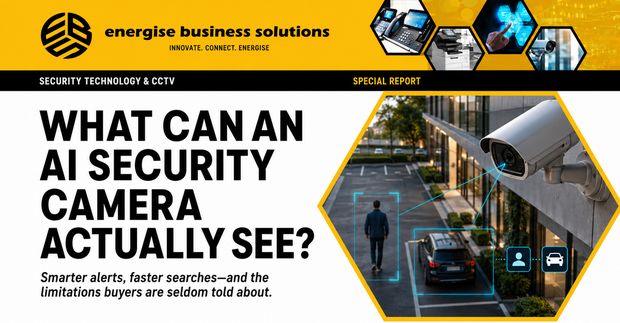
An AI camera is not a camera that understands a business, recognises every threat or makes reliable security decisions on its own. In most commercial systems, AI means that software analyses video to classify objects, apply defined rules and create searchable event information.
What the report covers
- What the software is actually doing
- Useful functions: classification, line crossing, loitering, event search, number plates
- Why nuisance alerts fall but genuine events can still be missed
- The rest of the system: switch, recorder, storage, router, fibre, backup power
- Who verifies an alert, and what happens next
- Footage, purpose, retention and POPIA
Key points
- Do not begin with "which AI camera should we buy?" Begin with "which event must the system detect, under what conditions, who will verify it, and what will happen next?"
- Camera position, lighting, weather, object speed, obstructions and configuration all affect performance.
- Remote viewing and alerts depend on more than the camera: the PoE switch, recorder, storage, router, fibre link and backup power are all part of the security system.
- Detection is not the same as understanding intent. Important alerts still need a trained person to confirm what happened.
Read the full report
The complete report, with the checklists and the decision record, is free to download.